Pilates Reformer for men is one of the fastest-growing fitness trends in 2026, and serious athletes are taking notice. What was once considered a niche practice has become a cornerstone of smart athletic cross-training.
At
Joy of Movement Gyrotonic and Pilates Studio, the shift is real and it is accelerating. Golfers, surfers, runners, and weekend warriors in Aptos are booking Reformer sessions not as a recovery afterthought, but as a central part of their performance strategy. Here is why that makes complete sense.
The Numbers Don't Lie: Men Are Showing Up
Reformer Pilates participation across the U.S. has reached an estimated 12.9 million active clients, a near-40% increase in recent years. The most striking part of that growth is not the total number. It is who is driving it.
A decade ago, men made up roughly 15% of Reformer class participants. In 2026, some boutique studios are reporting bookings approaching a 50-50 male-to-female split. That is not a minor adjustment. It is a fundamental redefinition of who this tool belongs to.
The reason is straightforward. Men who train seriously eventually hit a wall. Tight hips. A compressed lower back. Shoulder imbalances that shorten their swing. The Reformer addresses all of it directly.
What the Reformer Actually Does for Male Athletes
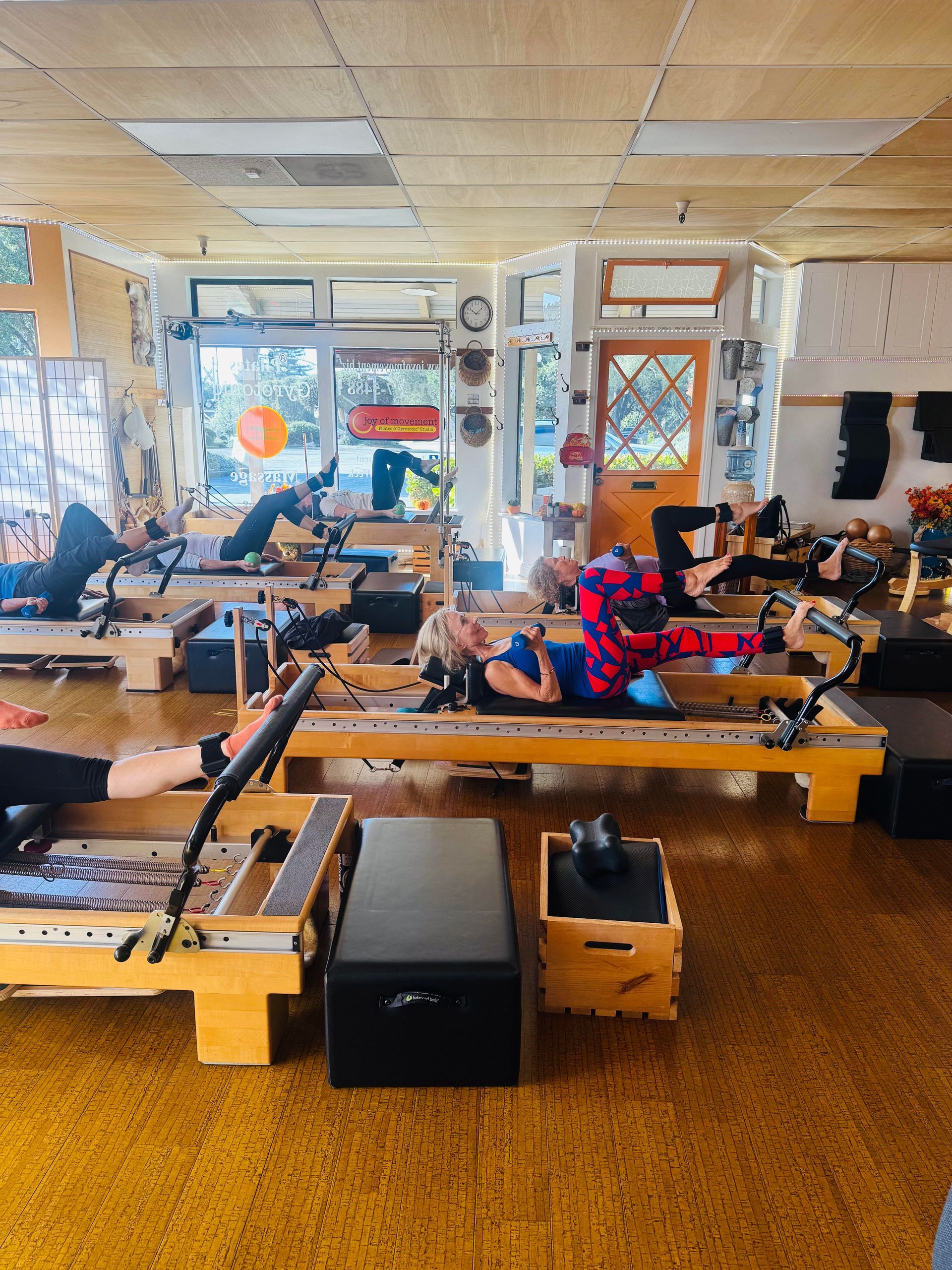
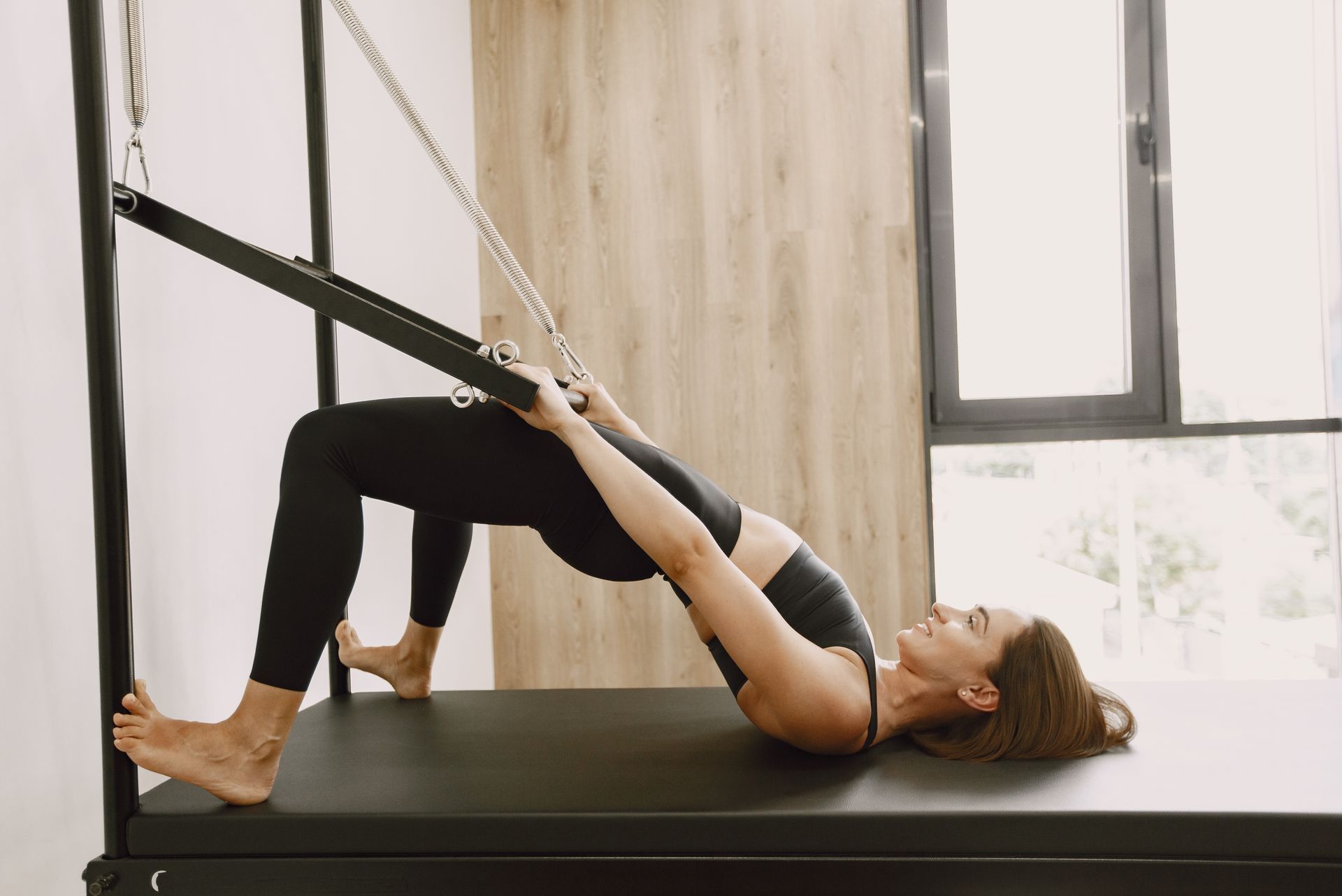
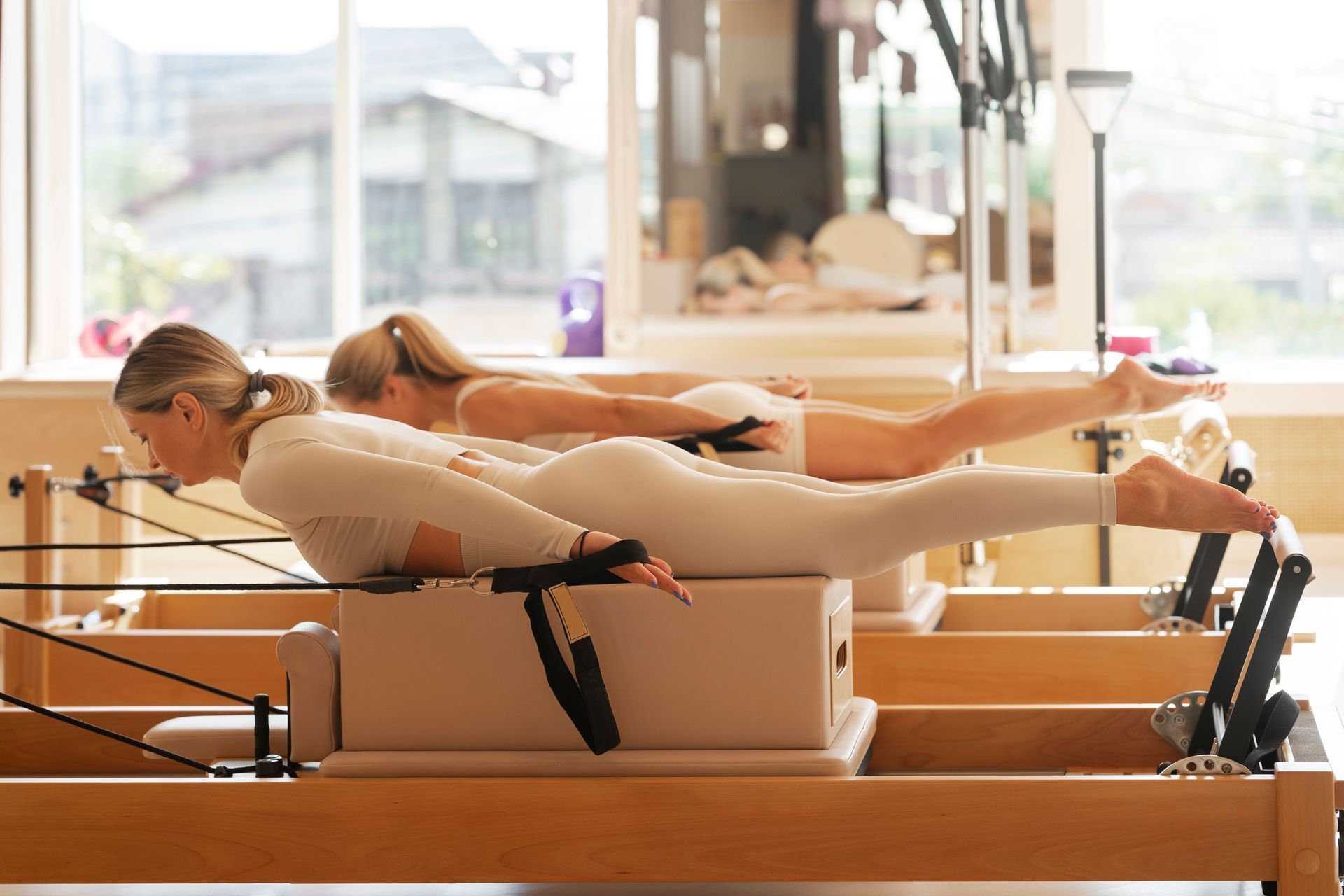
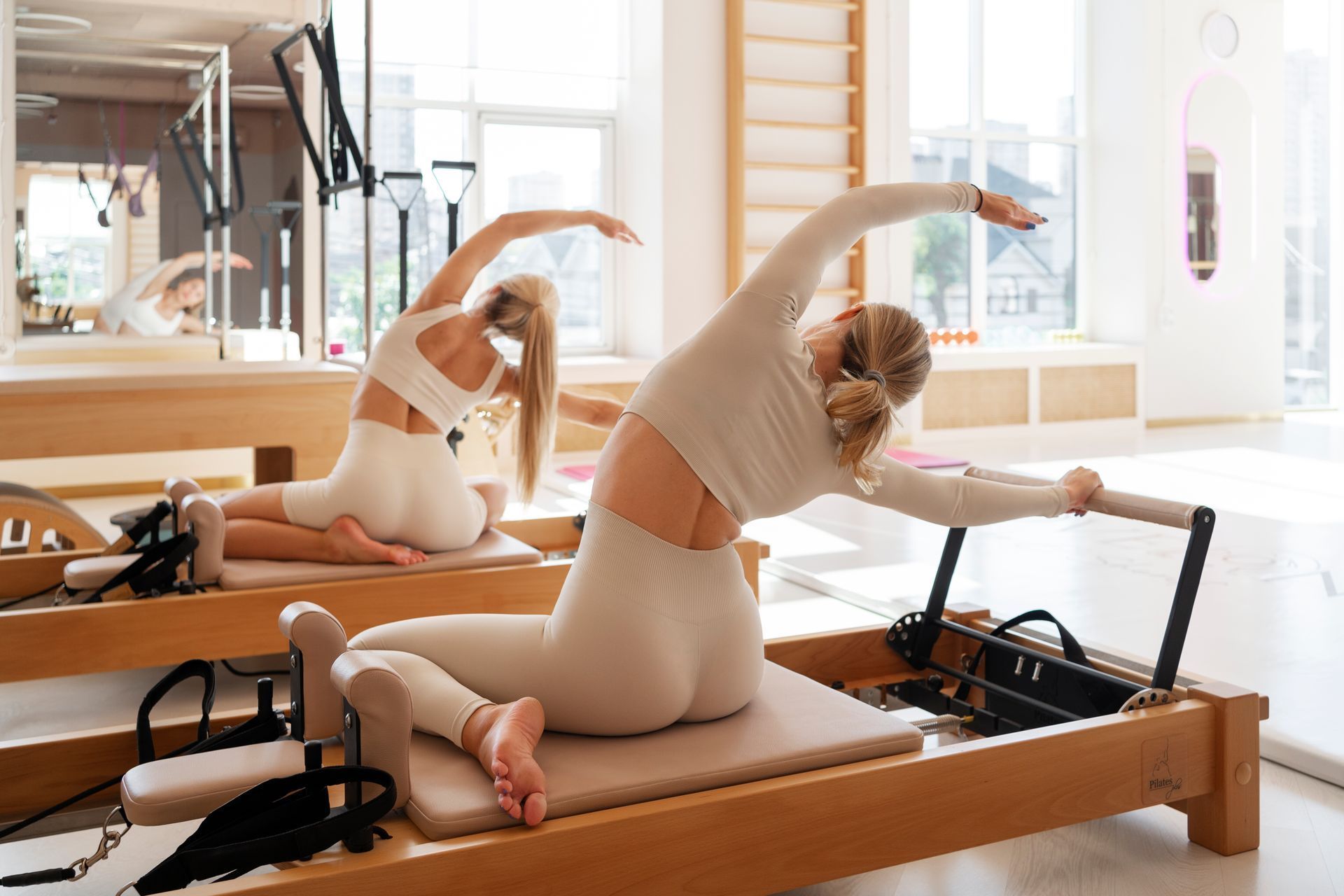
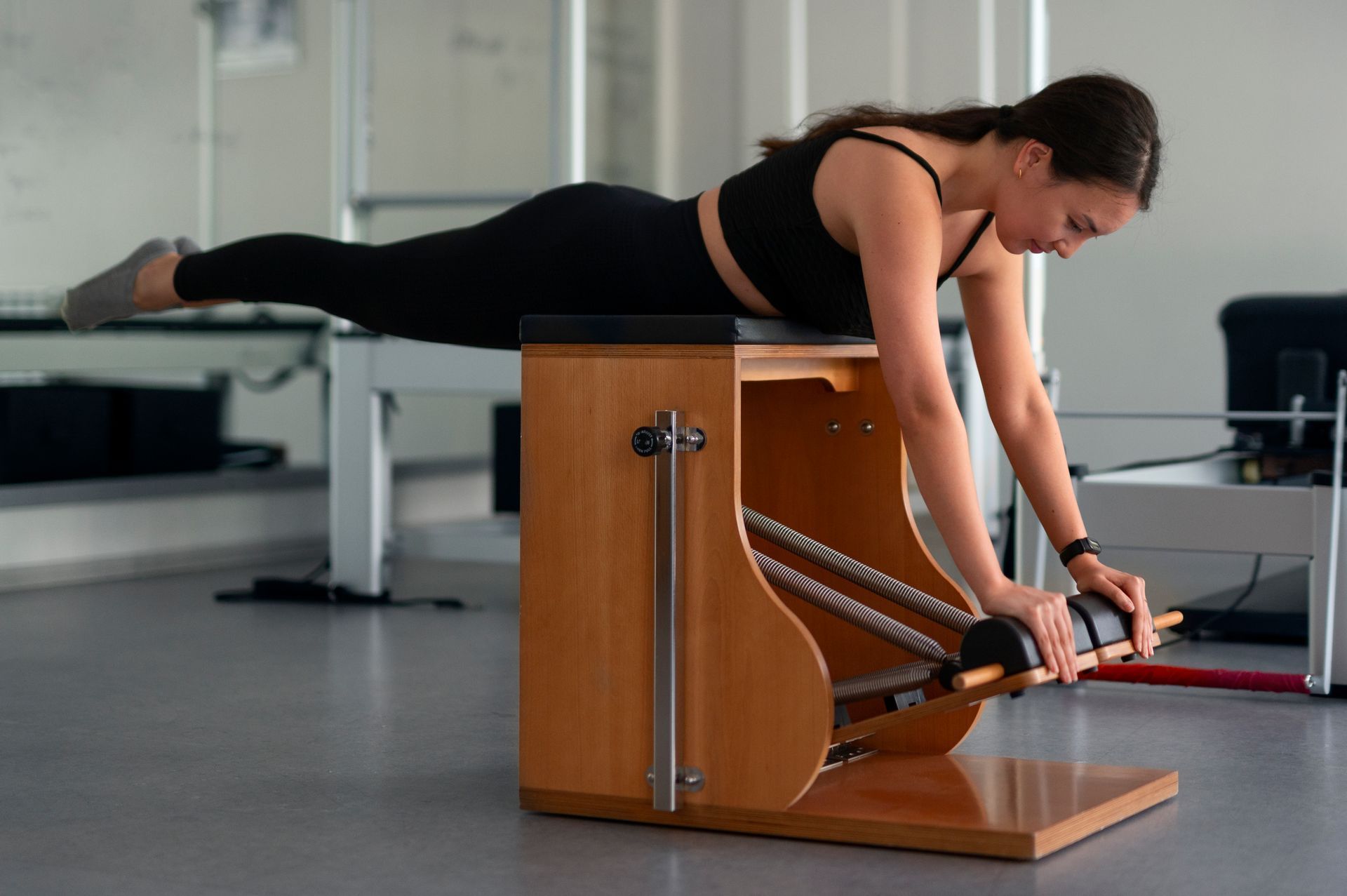
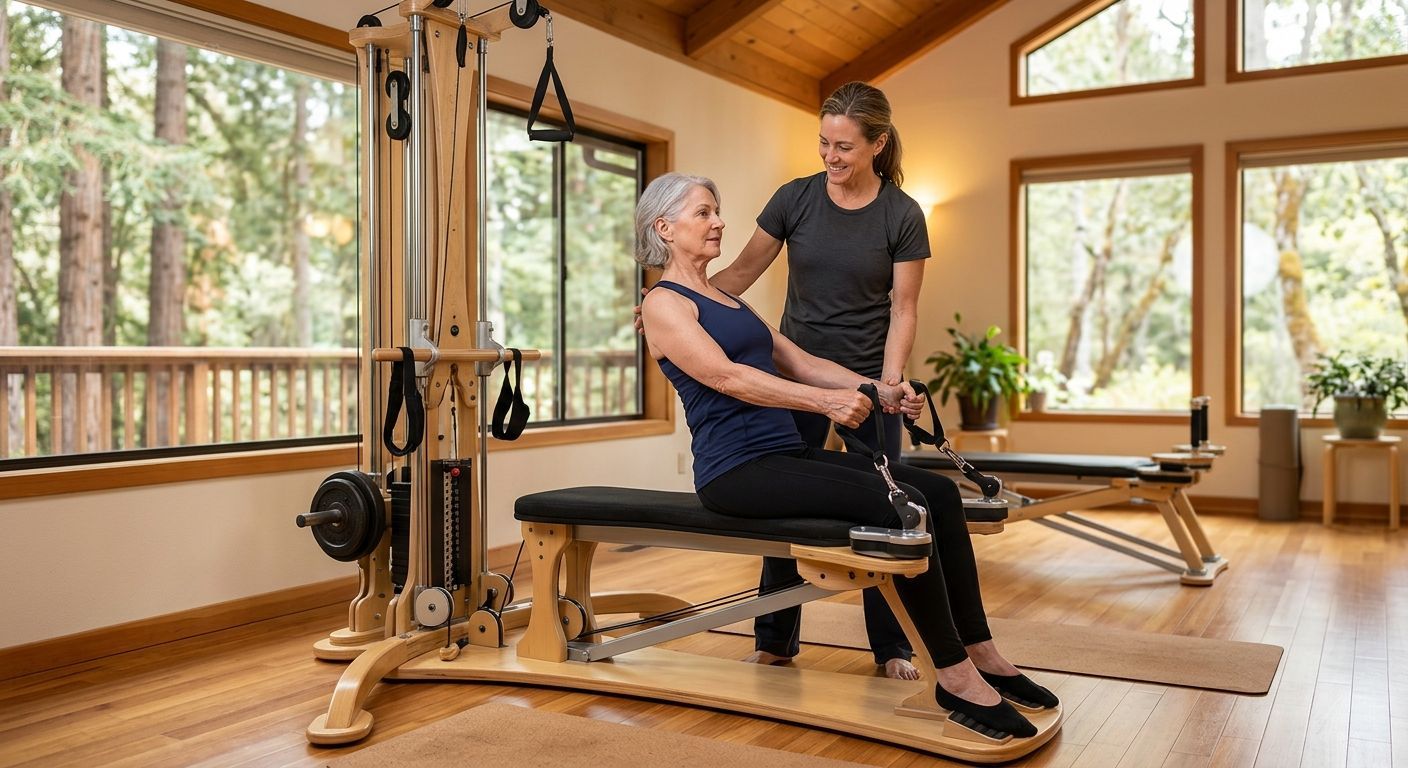
The Pilates Reformer is a spring-resistance machine. It allows for precise, controlled movement across a full range of motion. It targets the deep stabilizing muscles that most conventional training overlooks. Think of it this way: big-gym workouts often train the muscles you can see. The Reformer trains the muscles that protect everything else.
For male athletes in Aptos, the specific benefits are highly practical:
- Rotational power: Golfers develop a more fluid, powerful swing by strengthening the lateral and oblique core muscles that drive rotation.
- Balance and proprioception: Surfers build the subtle stabilizing strength that keeps them on the board through unpredictable conditions.
- Posterior chain balance: Runners chronically overdevelop the quads and hip flexors. The Reformer rebalances that equation by activating the glutes, hamstrings, and deep hip rotators.
- Shoulder and upper-back stability: For anyone spending hours at a desk or hunched over a steering wheel, the Reformer rebuilds the postural muscles that modern life systematically shuts down.
- Joint longevity: Low-impact resistance means heavy training loads without the cumulative wear on knees, hips, and the spine.
The Aptos Athlete's Reality in September
September in Aptos is a prime window for outdoor activity. The coastal fog has thinned, the trails through the redwoods are dry and accessible, and the ocean conditions attract surfers from across the region. Local golfers are logging rounds before the season winds down.
This is also the time of year when overuse injuries tend to surface. A summer's worth of hiking, paddling, and playing has accumulated in the body. Tight IT bands. Irritated rotator cuffs. A nagging lower back that was easy to ignore in July.
This is precisely where
Pilates Reformer sessions deliver their highest return. Rather than pushing through discomfort and compounding the problem, smart athletes use the Reformer to restore balance, decompress the joints, and build the functional strength that keeps them moving well into the fall and beyond.
"I'm Not Flexible Enough" Is Not a Reason to Skip It
This is the most common hesitation from men who have never tried the Reformer. It is also completely backwards. The Reformer is not a reward for people who are already flexible. It is a tool that builds flexibility systematically, starting from wherever your body is right now.
The spring resistance is adjustable. The range of motion is scalable. A session is always calibrated to the individual. That means a 60-year-old golfer with tight hips and a 30-year-old surfer with excellent mobility will each get a highly specific, productive workout from the same piece of equipment.
Strength Without the Breakdown
High-intensity training has a real cost. Joints wear. Tendons strain. Recovery time stretches. For men over 40, that cost compounds quickly.
Santa Cruz County's senior demographic is expanding rapidly. Local projections indicate that one in four residents will eventually be over 65. The community is paying close attention to how people maintain their physical independence as they age. The Reformer is a central part of that conversation.
It builds genuine, functional strength without loading the joints beyond their tolerance. It improves balance, which is one of the leading predictors of fall risk and long-term mobility. It keeps the body capable for the things that actually matter: the morning hike, the weekend surf session, the round of golf with friends.
Ready to experience what the Reformer can do for your body?
Book a session with the team at Joy of Movement Gyrotonic and Pilates Studio and find out why athletes in Aptos are making this their most important training hour of the week.
Frequently Asked Questions
Do I need any Pilates experience to start Reformer sessions?
No prior experience is necessary. Sessions for new clients are tailored to your current fitness level and movement patterns. The instructor calibrates the resistance and range of motion so you are always working productively, not struggling to keep up.
How is Pilates Reformer different from a regular gym workout?
Most gym training emphasizes isolated muscle groups and linear movement patterns. The Reformer trains the deep stabilizing muscles, improves neuromuscular coordination, and builds strength through full, functional ranges of motion. It complements conventional training rather than replacing it.
How often should I do Reformer sessions to see results?
Most clients notice meaningful improvements in mobility and core stability within four to six sessions. Once or twice a week alongside your existing training is a common and effective schedule. Your instructor can recommend the right frequency based on your goals.
Is Reformer Pilates appropriate if I have a prior injury or chronic pain?
It is one of the most widely recommended movement practices for rehabilitation and pain management. That said, always communicate your history with your instructor before the session. They can modify appropriately and work within safe parameters for your body.
Will it actually improve my athletic performance, or is it mostly for recovery?
Both. The Reformer builds specific functional strength, stability, and mobility. These qualities translate directly into better athletic performance. It also accelerates recovery by addressing the muscular imbalances and joint compression that accumulate through sport and training.